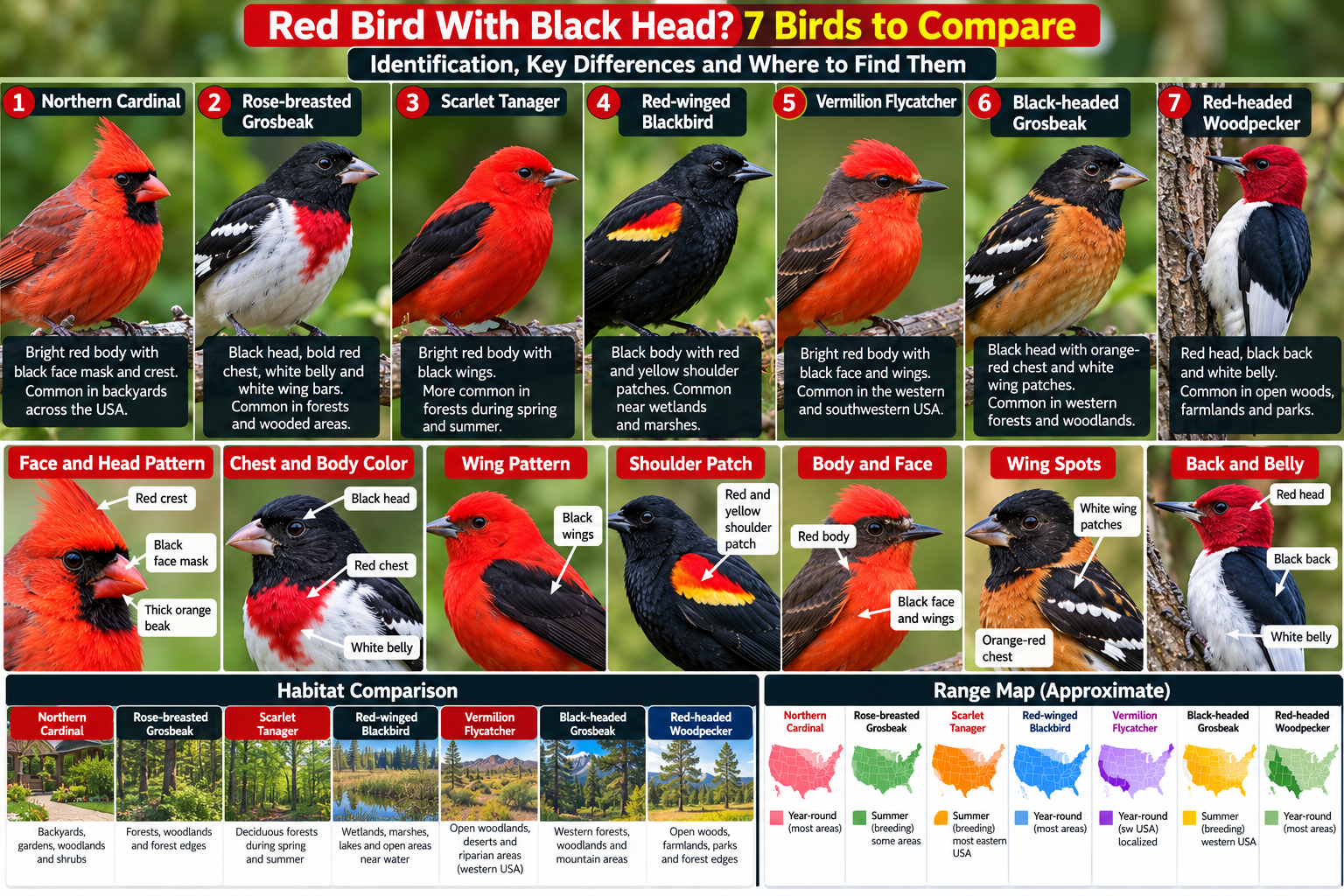
Spotting a red bird with a black head can be exciting, but that description may refer to a black face mask, dark wings or a genuinely dark head. This illustrated field guide explains which North American birds are plausible matches and how to tell them apart.
Quick answer: What is a red bird with a black head?
A bright red bird with a black face in a North American backyard is often a male Northern Cardinal. However, several other species have red plumage with dark heads, masks, wings or throat patches. Identification depends on exactly where the black appears, bill shape, body size, location and season. A black face mask is different from a fully black head.
Red birds with black heads: identification table
| Bird | Red and black field marks | Where to look |
|---|---|---|
| Northern Cardinal (male) | Brilliant red body, black face mask, thick orange-red bill and crest | Eastern and central U.S., parts of Southwest |
| Scarlet Tanager (breeding male) | Red body with jet-black wings and tail; head is red, not black | Eastern deciduous forests in breeding season |
| Vermilion Flycatcher (male) | Vivid red crown and underparts with dark brown-black eye mask, back and wings | Southwestern U.S. and southward |
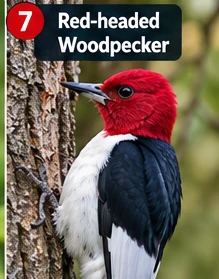
| Red-headed Woodpecker | Entire head bright red, body black and white | Eastern and central open woodlands |
| Red-winged Blackbird (male) | Black body with red-and-yellow shoulder patches | Wetlands and fields across North America |
| Painted Bunting (male) | Blue head, red underparts and green back; blue can appear dark in shade | Southern U.S. in breeding season |
These birds are not interchangeable matches. The table includes common lookalikes and species whose dark markings can create a mistaken impression of a black head.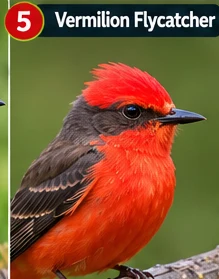
1. Northern Cardinal: red bird with a black face mask
Male Northern Cardinals are the most familiar match for a red backyard bird with black around its face. Their pointed crest, heavy triangular bill and dark patch around the bill and throat distinguish them from most other red songbirds. Females are primarily warm brown with reddish highlights and a similar crest and stout bill. Cardinals often visit sunflower-seed feeders, shrubs and garden edges.
For more feeder species, see the Backyard Birds of the Midwest identification guide.
2. Scarlet Tanager: red body and black wings
A breeding male Scarlet Tanager is strikingly scarlet with black wings and a black tail. Its head is red rather than black, but a brief glimpse through foliage can make the bird look dark-headed. Unlike cardinals, tanagers have no prominent crest and tend to spend time high in forest canopies. Outside breeding plumage, males become much duller yellow-green.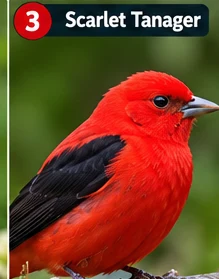
3. Vermilion Flycatcher: red crown and dark mask
Male Vermilion Flycatchers show a brilliant red crown and underparts set against darker eye-line, back, wings and tail. They are smaller, slender insect-catching birds with a relatively thin bill. They often perch conspicuously in open habitat and dart out to catch insects. In the United States they are most expected in the Southwest.
4. Red-headed Woodpecker: bright red head
The Red-headed Woodpecker is the reverse of the classic question: it has a fully red head with a bold black-and-white body. Adults have sharply divided color blocks and a straight, chisel-like bill. Juveniles have brownish heads. The species is associated with open woods, groves and standing dead trees. If the bird is climbing a tree trunk, pay attention to its woodpecker shape and posture.
To compare two smaller black-and-white woodpeckers, read our Downy Woodpecker vs Hairy Woodpecker guide.
5. Red-winged Blackbird: black with red shoulders
Male Red-winged Blackbirds are mainly glossy black, with red shoulder patches edged in yellow. From some angles only the red flashes are visible, causing a quick misidentification. They are common in marshes, wet meadows, agricultural fields and sometimes feeding areas. The female is brown and strongly streaked, looking very different from the male.
6. Painted Bunting: multicolored bird with a dark-looking head
A male Painted Bunting combines a blue head, green back and red underparts. In deep shade its blue head can appear nearly black, especially in a low-resolution photograph. It has a short, stout seed-eating bill and typically occupies dense brush or shrubby edges within its southern range. Females are greenish overall.
7. Could it be a House Finch?
A male House Finch can be reddish on the head and breast, but usually has brown streaks on its lower body and lacks the Northern Cardinal’s black facial mask and crest. It also has a smaller, less heavy-looking bill. Red intensity varies among House Finches, so bright color alone does not indicate a cardinal. For detailed differences between two reddish feeder finches, consult our House Finch vs Purple Finch comparison.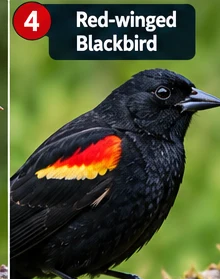
How to identify a mystery red bird in five steps
- Find the black area: Is it a face mask, full head, wings, back or shoulder patch?
- Check the bill: A thick seed-cracking bill suggests a cardinal or finch; a thin bill suggests an insect-eater.
- Look for a crest: A tall pointed crest strongly supports Northern Cardinal.
- Note the setting: A backyard feeder, forest canopy, marsh or open desert offers different possibilities.
- Record the location and date: Seasonal plumage and regional range help narrow the species.
A photograph showing the face, wings and full body is much more useful than one cropped to the head. When the view is poor, note the likely candidates rather than forcing a certain identification.
Frequently asked questions
What red bird has a black face and a crest?
A male Northern Cardinal is a strong candidate in much of the eastern and central United States. Its black face mask and pointed crest are distinctive.
Does a Scarlet Tanager have a black head?
No. A breeding male Scarlet Tanager has a red head and body, with black wings and tail.
Is a Red-headed Woodpecker a red bird with a black head?
No. Adults have a bright red head and a contrasting black-and-white body.
Can a female cardinal have a black face?
Female Northern Cardinals can show a dark facial mask, but their overall plumage is primarily brownish with red highlights.