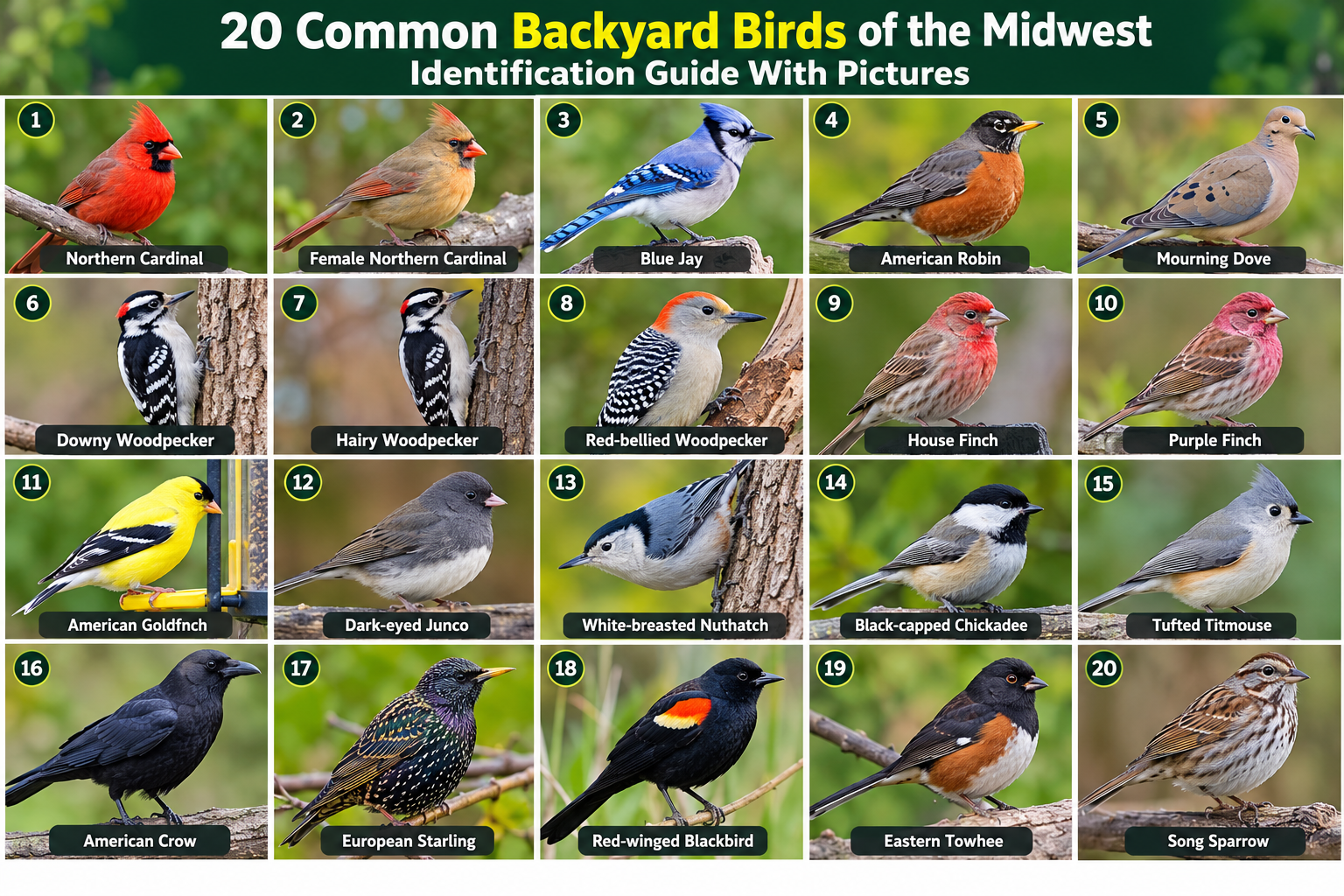
From cardinals at winter feeders to robins on spring lawns, the Midwest is home to a remarkable range of backyard birds. This identification guide covers 20 species commonly encountered in Midwestern neighborhoods, parks, and gardens. It focuses on field marks, behavior, and seasonal patterns to help distinguish similar-looking birds.
Quick Identification Chart: 20 Midwest Backyard Birds
| Bird | Key field mark | Typical Midwest occurrence |
|---|---|---|
| Northern Cardinal | Thick orange-red bill and pointed crest | Year-round |
| Blue Jay | Bold blue-and-white wing pattern | Year-round |
| American Robin | Orange breast and upright posture | Spring through fall; some overwinter |
| Black-capped Chickadee | Tiny bird with crisp white cheeks | Year-round in much of the northern Midwest |
| Tufted Titmouse | Gray crest and dark forehead | Year-round in much of the region |
| White-breasted Nuthatch | Often walks headfirst down tree trunks | Year-round |
| Downy Woodpecker | Short bill relative to head | Year-round |
| Hairy Woodpecker | Bill roughly as long as head depth | Year-round |
| Red-bellied Woodpecker | Striped back; red on head | Year-round in much of the Midwest |
| American Goldfinch | Small conical bill and undulating flight | Year-round in much of the region |
| House Finch | Curved upper bill and streaked flanks | Year-round |
| Purple Finch | Broad rosy wash in male; bold face pattern in female | Year-round or seasonal depending on location |
| House Sparrow | Chunky body and stout bill | Year-round |
| Mourning Dove | Pointed tail with pale edges | Year-round or migratory locally |
| Dark-eyed Junco | White outer tail feathers | Mostly fall through spring; breeds in northern areas |
| Song Sparrow | Strong breast streaking and repeated song phrases | Year-round or seasonal locally |
| Red-winged Blackbird | Male’s red shoulder patches | Mostly spring through fall |
| Common Grackle | Long tail and bright eye | Mostly spring through fall |
| European Starling | Short tail and straight pointed bill | Year-round |
| Ruby-throated Hummingbird | Hovering flight and needlelike bill | Spring through early fall |
Regional note: The Midwest includes a wide range of habitats and climates. A bird’s abundance and seasonality can differ between Minnesota, Michigan, Ohio, Iowa, Illinois, Indiana, Wisconsin, Missouri, Kansas, Nebraska, and the Dakotas. These seasonal descriptions are general rather than guarantees for every yard.
20 Common Backyard Birds of the Midwest
1. Northern Cardinal
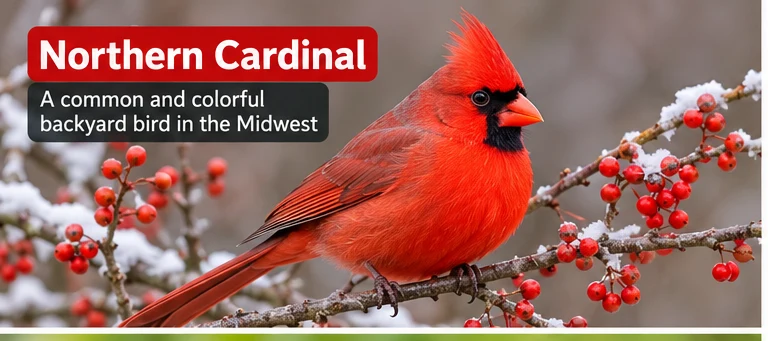
Male is bright red with a crest and black face; female is warm brown with red accents. Look for: thick orange-red bill and pointed crest. When to watch: year-round.
2. Blue Jay
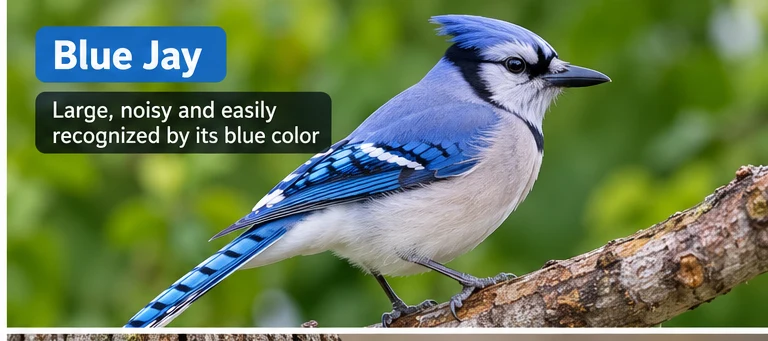
Blue upperparts, white underside, black necklace, and prominent crest. Look for: bold blue-and-white wing pattern. When to watch: year-round.
3. American Robin
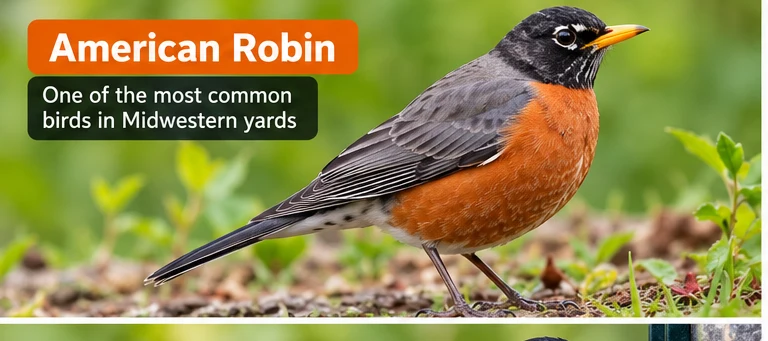
Gray-brown back, orange breast, and white eye ring. Look for: orange breast and upright posture. When to watch: spring through fall; some overwinter.
4. Black-capped Chickadee
Black cap and bib, white cheeks, gray back. Look for: tiny bird with crisp white cheeks. When to watch: year-round in much of the northern midwest.
5. Tufted Titmouse
Gray upperparts, pale underside, and small pointed crest. Look for: gray crest and dark forehead. When to watch: year-round in much of the region.
6. White-breasted Nuthatch
Blue-gray back, white face and belly, black or gray crown. Look for: often walks headfirst down tree trunks. When to watch: year-round.
7. Downy Woodpecker
Small black-and-white woodpecker with a short bill; male has a red patch on back of head. Look for: short bill relative to head. When to watch: year-round.
8. Hairy Woodpecker
Black-and-white woodpecker resembling Downy but larger with a longer bill. Look for: bill roughly as long as head depth. When to watch: year-round.
9. Red-bellied Woodpecker
Barred black-and-white back, pale underside, and red crown/nape. Look for: striped back; red on head. When to watch: year-round in much of the midwest.
10. American Goldfinch
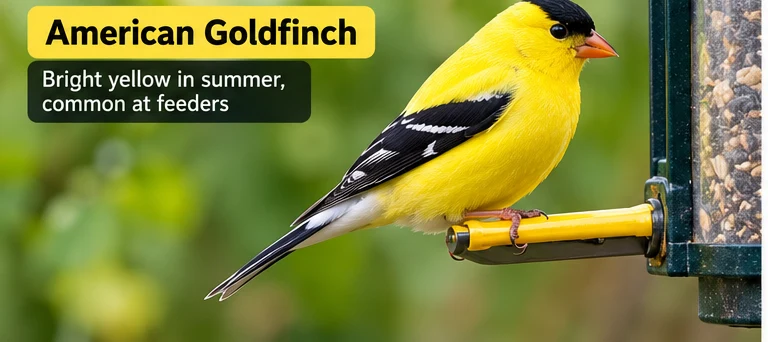
Breeding male is bright yellow with black wings; winter birds are dull olive-brown. Look for: small conical bill and undulating flight. When to watch: year-round in much of the region.
11. House Finch
Male often has red forehead, breast, and rump with brown streaks; female is brown and streaked. Look for: curved upper bill and streaked flanks. When to watch: year-round.
12. Purple Finch
Male often shows raspberry-red wash over head and upperparts; female has strong facial pattern. Look for: broad rosy wash in male; bold face pattern in female. When to watch: year-round or seasonal depending on location.
13. House Sparrow
Male has gray crown, black bib, chestnut nape; female is plain brown. Look for: chunky body and stout bill. When to watch: year-round.
14. Mourning Dove
Soft tan-gray bird with a small head, black wing spots, and long pointed tail. Look for: pointed tail with pale edges. When to watch: year-round or migratory locally.
15. Dark-eyed Junco
Slate-gray or brownish sparrow with pale belly and flashing white outer tail feathers. Look for: white outer tail feathers. When to watch: mostly fall through spring; breeds in northern areas.
16. Song Sparrow
Brown-streaked sparrow with long tail and often a central breast spot. Look for: strong breast streaking and repeated song phrases. When to watch: year-round or seasonal locally.
17. Red-winged Blackbird
Male glossy black with red-and-yellow shoulder patches; female heavily streaked brown. Look for: male’s red shoulder patches. When to watch: mostly spring through fall.
18. Common Grackle
Large iridescent blackbird with long keel-shaped tail and pale yellow eye. Look for: long tail and bright eye. When to watch: mostly spring through fall.
19. European Starling
Stocky dark bird with short tail; iridescent in breeding plumage and speckled in winter. Look for: short tail and straight pointed bill. When to watch: year-round.
20. Ruby-throated Hummingbird
Tiny green-backed hummingbird; adult male has ruby throat that can look dark. Look for: hovering flight and needlelike bill. When to watch: spring through early fall.
How to Identify a Bird in Your Yard
Start with size and shape: compare the bird with a sparrow, robin, or crow. Then check the bill, tail, head pattern, and wing markings. Note whether it hops on the ground, clings to bark, or feeds high in trees. Lighting can distort colors, so use multiple features instead of relying on one.
Similar Birds That Are Easy to Confuse
Downy Woodpecker vs. Hairy Woodpecker
See our Downy Woodpecker vs Hairy Woodpecker comparison for bill length, tail spots, calls, and identification tips.
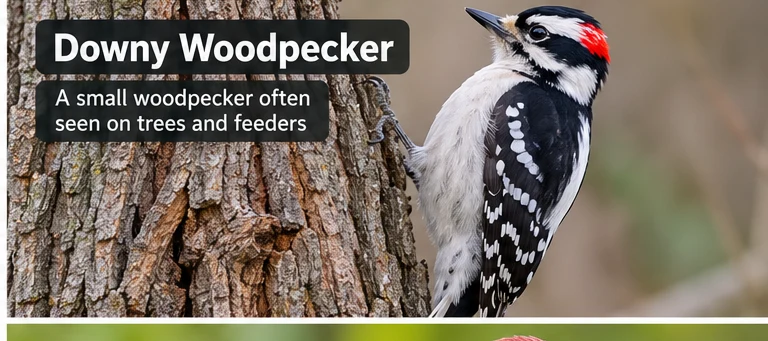
These two woodpeckers share a black-and-white pattern. The Downy is generally smaller with a short, stubby bill; the Hairy has a noticeably longer bill. Distance can make size misleading, so compare bill length against head size.
House Finch vs. Purple Finch
For a detailed side-by-side comparison of male and female field marks, see our House Finch vs Purple Finch identification guide.
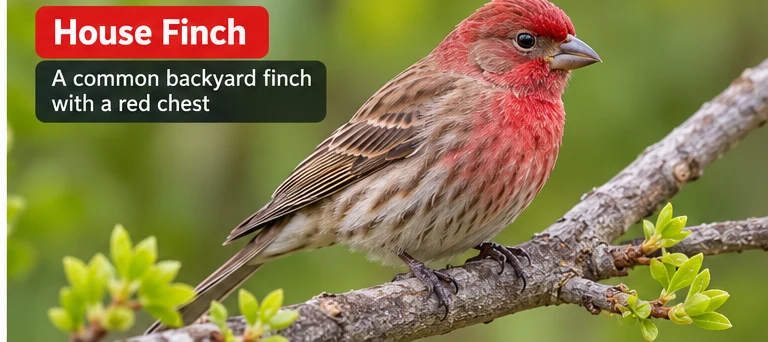
Male House Finches usually show red concentrated around the head and chest with brown streaking, while male Purple Finches often appear more evenly raspberry-colored. Female Purple Finches typically have a stronger facial pattern. Plumage varies, so check shape and several markings together.
Chickadee vs. Nuthatch
Both visit feeders, but chickadees have a rounder appearance and black bib. White-breasted Nuthatches have longer pointed bills and often travel down trunks headfirst.
What Birds Visit Midwest Feeders?
Black-oil sunflower seed attracts cardinals, chickadees, finches, and several other seed eaters. Nyjer can attract goldfinches; suet may bring woodpeckers and nuthatches. Use clean feeders, keep seed dry, and provide fresh water. If birds appear sick or local wildlife agencies advise a feeding pause, take feeders down and follow local guidance.
Birds by Season
Spring: Robins become conspicuous, red-winged blackbirds return to breeding territories, and migrating hummingbirds begin appearing. Summer: Goldfinches brighten in breeding plumage, and many yards host nesting birds. Fall: Migrants move through, and juncos begin appearing in many areas. Winter: Cardinals, chickadees, nuthatches, and woodpeckers can be especially easy to observe at feeders.
Frequently Asked Questions
What is the most common backyard bird in the Midwest?
There is no single answer for every location or season. American Robins, Northern Cardinals, House Sparrows, chickadees, and other familiar species are widespread, but local habitat determines which birds appear most often.
What small Midwest bird has a red head?
Possibilities include a male House Finch, a male Purple Finch, or a woodpecker with red head markings. Compare the bill, overall shape, and where the red appears before identifying it.
Are goldfinches in the Midwest during winter?
Yes, American Goldfinches remain in much of the Midwest year-round, but winter plumage is muted rather than bright yellow.
How can I identify a bird from a photograph?
Capture the side profile, head, bill, wings, and tail if possible. Record location, month, approximate size, and habitat. Compare your observations with authoritative regional field guides or species accounts.
Reliable Identification Resources
For photos, sounds, range maps, and additional identification details, consult the Cornell Lab of Ornithology’s All About Birds and the National Audubon Society. These resources can help confirm birds that vary by age, sex, season, or region.
Editorial note: This draft intentionally does not include species photographs. Add correctly licensed and accurately labeled photos before publication to make visual identification easier.
3 thoughts on “Backyard Birds of the Midwest: 20 Birds to Identify”